

Healthcare generates information every single day.
Appointments are scheduled. Claims are submitted. Payments are received. Patients return for follow ups. Insurance companies respond. Reports continue growing.
Most organizations already have plenty of data.
What they often lack is understanding.
That’s exactly why healthcare analytics has become one of the fastest growing priorities across the United States.
It’s no longer enough to know what happened last month.
Healthcare leaders want to know why it happened and what should happen next.
Data Without Context Has Limited Value
A report might show an increase in denied claims.
Useful information, certainly.
But it doesn’t explain whether those denials came from one insurance payer, one coding issue or one operational process.
That’s where analytics changes everything.
Instead of reviewing isolated numbers, organizations begin connecting information across the entire revenue cycle.
Patterns become easier to recognize.
Decisions become more confident.
Better Visibility Creates Better Decisions
Healthcare administrators face dozens of operational decisions every week.
Should staffing change?
Is billing performance improving?
Which payer creates the most reimbursement delays?
Without reliable analytics those decisions become assumptions.
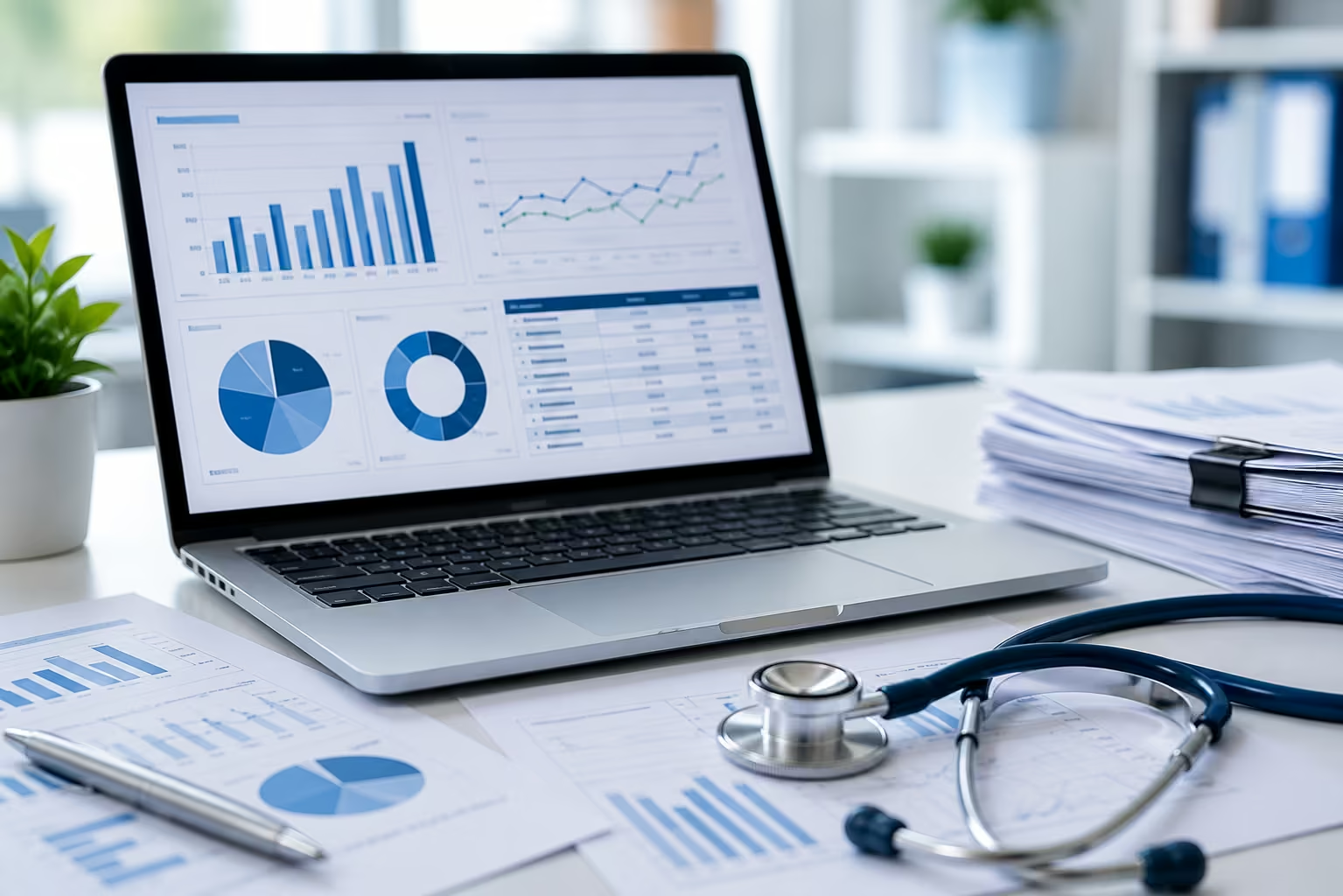
Modern reporting provides much clearer visibility into operational performance, allowing leadership teams to respond proactively instead of waiting until financial problems become obvious.
Analytics Supports More Than Billing
Although revenue cycle management benefits greatly from analytics, the impact extends much further.
Healthcare organizations use data to improve many operational areas including:
- Revenue cycle performance
- Claim approval rates
- Insurance payment trends
- Workforce productivity
- Patient scheduling efficiency
- Financial forecasting
Each insight contributes to stronger operational planning.
The Role of Technology
Today’s healthcare systems collect far more information than older platforms ever could.
Artificial intelligence, automation and reporting dashboards continue improving how organizations monitor daily performance.
Still, technology alone doesn’t create better decisions.
People interpreting that information remain just as important.
At Sahar Technologies, our approach combines reporting with operational expertise so healthcare providers receive insights they can actually apply instead of simply generating more reports.
A Competitive Advantage
Healthcare continues becoming more competitive.
Organizations that understand their operational performance usually adapt faster to changing regulations, payer requirements and financial pressures.
Analytics provides that flexibility.
Instead of reacting after problems develop, leaders gain the ability to identify risks much earlier.
That advantage becomes increasingly valuable as healthcare continues evolving.
Final Thoughts
Healthcare analytics is no longer something reserved for large hospital systems.
Practices of every size benefit from stronger reporting, clearer visibility and better operational insight.
The organizations making informed decisions today will likely be the ones leading tomorrow.
Understanding your data isn’t just helpful anymore.
It’s becoming essential.
If you have any questions regarding “healthcare analytics solutions”, feel free to contact us. For inquiries, call us at: +92 329 8263808.
Disclaimer: The above information is subject to change and represents the views of the author. It is shared for educational purposes only. Readers are advised to use their own judgment and seek specific professional advice before making any decisions. Sahar Technologies is not liable for any actions taken by readers based on the information shared in this article. You may consult with us before using this information for any purpose.